
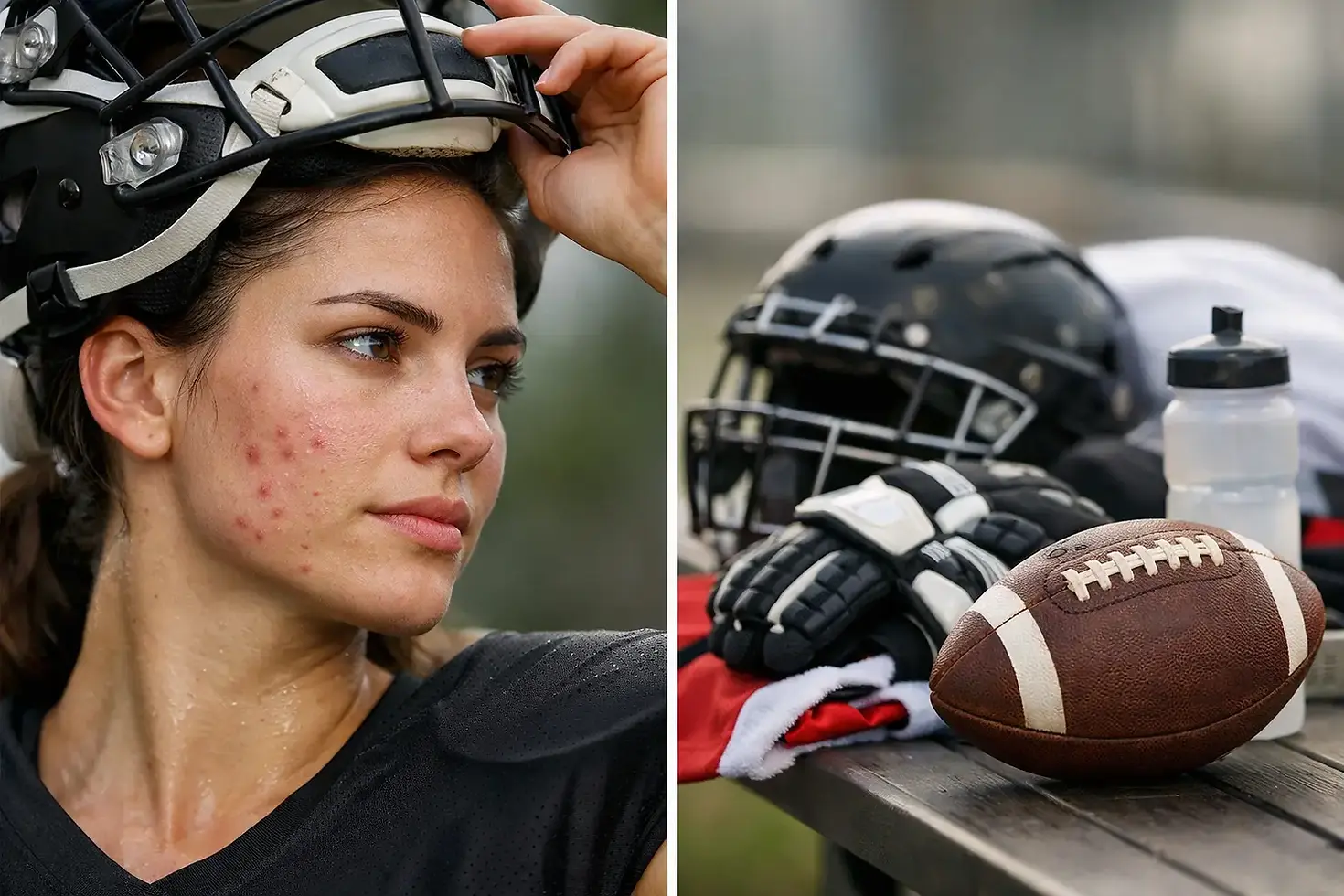
Acne From Sports Helmets and Game-Ready Skin

Your helmet protects your head. It should not be the reason your forehead, hairline, cheeks, or chin are breaking out. Acne from sports helmets is a real athlete problem, especially during hot practices, doubleheaders, tournament weekends, and any season when sweat is part of the uniform.
The good news: you do not need a 12-step bathroom routine to get ahead of it. You need a few smart habits that work around practice, respect your skin, and fit the pace of your sport. Clearer skin is not about being perfect. It is about keeping sweat, oil, bacteria, and friction from getting extra playing time.
Why Sports Helmets Can Cause Breakouts
Helmet-related breakouts are often called acne mechanica. That is the skin-care name for acne triggered or worsened by pressure, rubbing, heat, and trapped sweat. A helmet can create all four at once.
During a hard practice, sweat mixes with natural skin oil, sunscreen, makeup, hair products, and whatever was left on the helmet padding from the last session. If the helmet presses that mix against your skin for an hour or two, pores can get irritated and clogged. Add repeated rubbing at the hairline, temples, forehead, jaw, or chin strap, and a small bump can turn into a full breakout.
This does not mean your helmet is dirty or that you are doing something wrong. It means you are an athlete doing athlete things. Skin can be sensitive when it is hot, sweaty, and under pressure.
It may not look like your usual acne
Helmet acne often shows up exactly where your gear touches: along the forehead under the padding, around the temples, beneath a chin strap, or at the back of the neck. You might see small rough bumps, whiteheads, red pimples, or tender spots that flare after practices.
If the bumps are intensely itchy, spread quickly, become painful, or do not improve after a few weeks of consistent care, check in with a dermatologist. Not every rash under a helmet is acne, and getting the right answer beats guessing.
The Game Plan for Acne From Sports Helmets
The best routine happens before, during, and after you play. Think less about harsh products and more about reducing buildup before it gets trapped under your gear.
Before practice: start with clean, light skin
Wash your face before practice if you are carrying makeup, heavy moisturizer, old sunscreen, or a full day of oil and grime. A gentle cleanser is usually enough. Scrubbing hard or using strong acne products right before you sweat can leave skin irritated, which makes helmet friction feel worse.
If you play outdoors, sunscreen is still a non-negotiable. Choose a lightweight, non-comedogenic formula, meaning it is less likely to clog pores. A powder sunscreen can be a convenient option for athletes who hate the greasy feel of traditional sunscreen or need a quick reapplication between games. The goal is protection without a thick layer that slides around under a helmet.
Keep hair products in check too. Heavy pomades, oils, edge control, and leave-in products can transfer from your hairline to your helmet padding. You do not have to give up your style. Just keep products away from the forehead when possible and wash them out after play.
During play: manage sweat without rubbing your face raw
Do not use the same sweaty towel to wipe your face, hands, cleats, and helmet. Bring a clean, soft towel or disposable face wipes and press or blot sweat instead of aggressively dragging fabric across your skin. Friction is part of the problem, so less rubbing is a win.
If your sport allows it, a clean moisture-wicking helmet liner can help pull sweat away from the skin and create a small buffer between your face and the padding. The trade-off is that liners can trap sweat too if they are never washed. Treat them like socks: fresh one for each practice or game.
Avoid picking at bumps during competition. It is tempting when you can feel a spot under your helmet, but touching and squeezing can push irritation deeper and raise the risk of dark marks or scarring. Let the game get your attention, not the pimple.
After practice: do not let sweat sit through the car ride
The post-practice window matters. Once the helmet is off, take off sweaty headbands, hats, and liners as soon as you can. If you cannot shower immediately, use a gentle cleansing wipe or rinse your face with water, then cleanse properly when you get home.
Use a mild cleanser to remove sweat, sunscreen, and buildup. Then follow with a light moisturizer. Yes, even acne-prone skin needs moisture. Skin that gets overly dry can produce more oil and become more reactive, especially if you are using acne treatments.
A hydration spray can be a clutch addition to a gym bag when your skin feels tight, hot, or salty after practice. It is not a replacement for cleansing, but it can help refresh skin between events and discourage the urge to scrub your face too hard.
Clean Gear Is Skin Care, Too
You cannot out-cleanse dirty helmet padding. If sweat and oil stay in your helmet, they come right back to your skin at the next practice.
Wipe down the inside of your helmet after every use, following the manufacturer’s care instructions. Pay attention to forehead pads, cheek pads, chin straps, and any area that touches your skin. Let the helmet dry fully in an open, ventilated space. Tossing it wet into a sealed bag is basically an invitation for odor and buildup.
Wash removable liners, straps, skull caps, and headbands after every wear. If you share equipment, clean it before putting it on your face. This is one of those low-effort habits that can make a major difference over a long season.
Also think about what touches your face after practice. Change out of your jersey, wash your pillowcase regularly, and keep your phone screen clean. None of these things cause acne on their own, but when your skin is already irritated from a helmet, they can add to the pileup.
Build a Simple Routine That You Will Actually Use
The right acne routine depends on how sensitive your skin is and how often you practice. More products do not automatically mean better results. Start simple, stay consistent for several weeks, and adjust one thing at a time.
For many athletes, a basic rhythm works best: gentle cleanse before or after activity as needed, sunscreen for outdoor play, cleanse after practice, and moisturize. If breakouts keep showing up, an over-the-counter acne ingredient can help. Salicylic acid is often useful for clogged pores, while benzoyl peroxide can help with inflamed acne. Both can be effective, but both can also dry out skin.
Use them carefully. Start two or three nights a week rather than attacking your face every day. Benzoyl peroxide can bleach towels, pillowcases, and colored fabrics. Strong acids, rough scrubs, and too many active ingredients at once can leave skin stinging and flaky, which is not the drip anyone wants on game day.
If you are a younger athlete, loop in a parent or guardian before starting stronger treatments. If acne is painful, cystic, leaving dark marks, or affecting your confidence, a dermatologist can help build a plan that fits your sport and your skin.
Small Changes That Protect Your Confidence
Skin flare-ups can feel bigger than they are, especially when photos, team media, school, and competition all happen in the same week. Do not let a breakout convince you to hide. Acne is common, and helmet acne is especially common when you train hard.
What matters is having a routine that supports your performance instead of creating another thing to worry about. Keep your face clean, your sunscreen light, your gear fresh, and your hands off active breakouts. Products made for real athlete schedules, including Starr'd Athletics R.e.Skin essentials, can make that routine easier to keep in your bag and in rotation.
Your helmet is part of your game-day armor. Keep it clean, give your skin a little recovery time, and show up ready to compete with confidence.



Comments