
Eye Black Stick Versus Grease: Which Wins?
- Starr'd Athletics

- Jun 15
- 6 min read
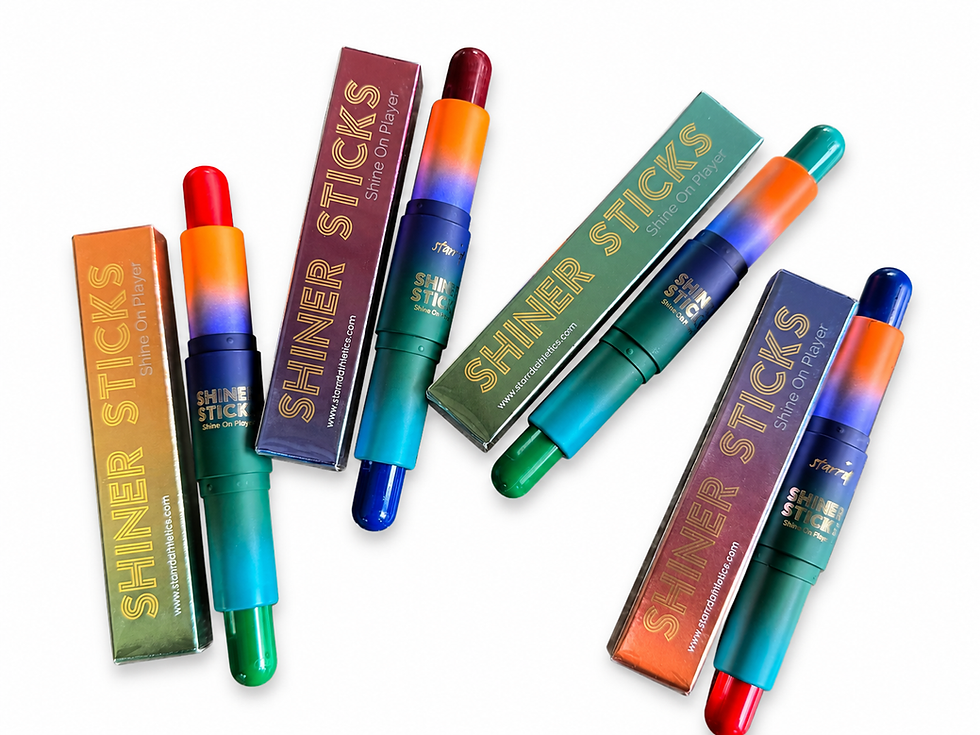
You feel it before first whistle - sunscreen on, hair tight, cleats laced, nerves up a little. Then comes the eye black decision. In the eye black stick versus grease debate, the real question is simple: what actually holds up when the game gets hot, sweaty, fast, and physical?
For a lot of athletes, both options can get the job done. But they do not perform the same, and they definitely do not wear the same. One tends to be cleaner, faster, and easier to control. The other can feel more old-school, more messy, and sometimes harder to trust once sweat starts rolling. If you care about performance and your game-day look, the difference matters.
Eye black stick versus grease: what is the actual difference?
At a basic level, both products are made to darken the skin under the eyes and cut glare from sunlight or stadium lights. That is the shared goal. The difference is in the format, and format changes everything.
An eye black stick is solid. You swipe it on like a balm or oversized crayon, which makes it easier to place exactly where you want it. It usually gives you more control over shape, thickness, and symmetry, especially if you are getting ready fast in a car, at the field, or on the sideline.
Grease is softer and heavier. Depending on the product, it can feel more like thick face paint or a petroleum-based smear. Some athletes like that because it feels traditional and dramatic. Others find it harder to apply evenly, easier to overdo, and more likely to slide once sweat gets involved.
That is the core of eye black stick versus grease. Same purpose, different experience.
Why athletes usually notice application first
Before you even get to durability, application is where most players pick a side.
A stick is usually the faster option. You twist, swipe, check the mirror, and go. It is more forgiving if you want clean lines or if you are not trying to spend ten minutes fixing one side to match the other. For younger athletes and busy parents, that convenience is a big deal. Nobody wants a messy game-day routine before an early tournament check-in.
Grease can take more effort. Because it is softer, it is easier to press on too thick or spread beyond the shape you wanted. You may need a finger to smooth it out, which means black residue on your hands before you even touch your jersey, bag, or phone. If your pregame routine is already packed, that extra mess gets old fast.
There is also the comfort factor. A stick often feels lighter and more controlled on the skin. Grease can feel heavier, especially in heat. Some athletes do not mind that at all. Some hate it by halftime.
Performance under sweat is where the gap shows up
Game day is not a product test in perfect conditions. It is sweat, sunscreen, dust, contact, and maybe a hand wiping across your face after a hard run.
This is where a well-made eye black stick often pulls ahead. Because the formula is more structured, it tends to stay where you put it better than a greasy formula. That does not mean every stick is perfect or every grease product fails. It means the odds usually favor the format that is less slick to begin with.
Grease has a reputation for movement because, honestly, movement is built into the texture. If the formula is extra soft, sweat can break it down faster. It can streak, smear, or transfer more easily to towels, sleeves, and fingers. If you are playing a sport where you are constantly touching your face, adjusting headbands, or colliding with other players, that matters.
For athletes who want eye black to last from warmups through the final whistle without looking wrecked, stick formulas often make more sense.
Eye black stick versus grease for style and self-expression
Performance matters, but let us be real - athletes care about how they look too. That is not extra. That is part of confidence.
A stick usually gives you a sharper, more intentional finish. If you want bold stripes, a clean edge, or a look that feels game-ready instead of thrown on, a stick makes that easier. It is also a better fit for athletes who see eye black as part of their identity, not just utility. Your game-day look should hit the same way your play does.
Grease can look intense, but it can also look uneven fast. Sometimes that rougher style is exactly what a player wants. In football culture especially, that smudged, gritty look can feel classic. But if your goal is polished drip with consistent placement, grease is harder to control.
That is one reason modern athletes are leaning toward products that blend function with presentation. A product should work hard, but it should also look good in photos, under lights, and across a full match.
Skin feel matters more than people admit
A lot of athletes ignore skin comfort until they use a product that feels bad.
The under-eye area is sensitive. If a formula feels thick, oily, or suffocating, you are going to notice it. Maybe not in the first five minutes, but definitely once the sun is up and your body temperature climbs.
Stick formats often feel cleaner on the skin because they go on with less excess. You are laying down product where you want it instead of pressing around a softer mass. That can mean less residue and less of that sticky, slippery feeling athletes hate.
Grease can feel more occlusive. Some players like the heavy-duty vibe. Others feel like it traps sweat and turns their face into a mess. If your skin is already dealing with sunscreen, dirt, and heat, a lighter-wearing product can make a long day feel more manageable.
This is also where modern athletic brands have an edge. Products made for athletes should think beyond tradition and consider wear, comfort, and skin experience too. Starr'd Athletics built its approach around that exact idea - think eye black, but better.
Removal and cleanup are part of the choice
Nobody talks enough about after the game.
A stick usually leaves you with less cleanup because application is more precise from the start. If it stayed in place during play, it is less likely to be spread all over the surrounding skin when it is time to wash up.
Grease can be a different story. Because it is softer and more transferable, it may migrate more during play and take more effort to fully remove later. That is annoying when you are exhausted, sitting in the car after a doubleheader, or trying to clean up fast before heading somewhere else.
Parents notice this too. A product that ends up on uniforms, towels, and fingers is not just a style issue. It is a hassle issue.
So which one is better?
If you want the short answer, most athletes will do better with a stick.
It is usually easier to apply, cleaner to wear, better under sweat, and more consistent if you care about sharp game-day style. For youth athletes, teen players, and anyone building a fast routine before practice or competition, that ease matters a lot.
That said, grease is not automatically wrong. If you love the traditional feel, prefer a rougher visual, or just grew up using it, you may still choose it. Some athletes like that heavier, old-school look and do not mind a little mess. It depends on your sport, your climate, your skin tolerance, and how much you care about precision.
But if you are asking which option fits the modern athlete better, especially one who wants performance without sacrificing presentation, the answer leans hard toward stick.
What to choose for your sport and routine
For soccer, lacrosse, baseball, softball, and other outdoor sports where sweat, sun, and fast pregame routines all collide, a stick usually makes more sense. You can apply it quickly, keep your hands cleaner, and trust the look to stay more locked in during play.
For football players or athletes chasing a more rugged, smeared aesthetic, grease might still appeal. Just know what comes with it - more transfer, less precision, and a higher chance of needing touch-ups.
If you are a parent buying for your athlete, the stick is usually the safer call. It is easier for younger players to use on their own and less likely to turn into a mess in the backseat mirror five minutes before game time.
The best gear is not just about tradition. It is about what helps you show up ready, feel confident, and stay focused on the field instead of worrying about what is sliding down your face. Pick the format that matches your pace, your look, and the way you compete.


Comments